
Beta Glucans - Which one is the best?


Beta glucan is the first choice of pharmacists for strengthening immunity. There are several types of beta glucan available in many forms such as capsules, tablets, syrups, effervescent tablets, granules and others. What is the best beta glucan? Before answering that question, let's take a look at what beta glucans are and how they are made.
In this article
Characteristics of beta glucans
Beta glucans have mostly been researched for their immunological properties, but also for some others that we will describe.
Beta glucans are soluble fibers that come from the cell walls of bacteria, fungi, yeasts and some plants.
They are naturally present in cereal bran (barley and oats and to a much lesser extent in rye and wheat, in amounts of about 7%, 5%, 2% and less than 1% respectively), the cell wall of baker's yeast (Saccharomyces cerevisiae) and many types of mushrooms (Shiitake, Reishi, Maitake).1
Beta glucans are polysaccharides whose structure consists of D-glucose molecules connected by β-1,3 glycosidic bonds in a skeleton from which D-glucose chains connected by β-1,4 or β-1,6 glycosidic bonds protrude like branches.
FDA (U.S. Food and Drug Administration) 2008 yeast beta-glucans Saccharomyces cerevisiae and in 2011, beta-glucans isolated from mushrooms were granted status GRAS. This is a status for food and food ingredients that means they are "generally recognized as safe for use". In order to achieve the desired bioavailability of beta glucan, the purification process, i.e. the removal of lipids and proteins from the yeast cell wall during production, is crucial. The required level of purity is at least 70-85%.
A synergistic immunostimulatory effect has been demonstrated in the combination of beta - glucan with vitamin C, zinc, propolis, honey, probiotics or reservatrol.3
Types and action of beta glucans
The difference between individual beta glucans is the length of the chain, the structure and the type of connection of the side branches of the D-glucose chains, and thus their biological and pharmacological effect is determined. The more complex the molecule, the more potent beta glucan is considered.
- 1,3/1,4 – β glucans are isolated from the cell wall of oat and barley grains and play a role in maintaining normal cholesterol levels in the blood.
- 1,3/1,6 – β glucans are found in the wall of yeasts and fungi and have an immunomodulatory effect.2 They stimulate the work of the immune system, and indirectly affect the non-specific immune response, strengthening the activity of macrophages, neutrophils and killer cells in the fight against various pathogens.
Yeast-derived glucans are most commonly used in dietary supplements for economy and ease of isolation. Those obtained from fungi have a distinctly branched shape, which is why they have a stronger stimulating effect on immunity.
Dosage
Food supplements are certainly the most practical source of beta glucan.
- The suggested recommended doses for the minimum effectiveness of beta-glucan are 2 - 4 mg/kg of body weight.
- The usual dose for prevention and stimulation of immunity is 50 - 500 mg of 1,3/1,6 - β glucan for adults, and 2 - 45 mg/ml for children.
- When used to support treatment and in acute conditions, adults should take 500-3000 mg per day.
- Oncology patients take at least 1,5 g per day.
- To regulate cholesterol in the blood, it is necessary to take more than 3 g of beta-glucan per day, from oats and barley.
Beta glucans are taken half an hour before a meal for better absorption.
The best beta glucan
Beta glucan for immunity, viruses and colds
Support for the immune system - the most common reason for using beta-glucans, and those from yeasts and mushrooms. Code falling immunity, as a prevention and treatment support for bacterial, viral or fungal diseases.
Upper respiratory tract infections - beta-glucans from yeast and mushrooms, in combination with vitamins, minerals and antioxidants, reduce the symptoms caused by upper respiratory tract infections.
Imunosal capsules contain a unique combination of powerful Goldcell beta-glucan, vitamins, essential minerals and high-value coenzyme Q10.
They are intended for adults and children from 12 years of age.
Inside this affordable beta glucan is as much as 900mg of beta glucan.
 Pharmoval Imunosal, 60 Capsules, Beta Glucan 900mg, Vitamins, Minerals, Coenzyme Q10
Beta glucan for children
When choosing beta glucan for children, it is important to find a nutritional supplement with a corrected taste that will appeal to children and with an appropriate dose for the youngest.
Imunosal Junior syrup for children contains a unique combination of vitamins and minerals for the development and immunity of children and is specially adapted for children of the youngest age. It has an excellent fruity taste that children love.
It has a great fruity taste that kids love.

Beta glucan for allergies
In the case of allergies, beta glucans can reduce the appearance and intensity of allergy symptoms and achieve a better mood.
Solgar Beta Glucans contribute to strengthening immunity (in infectious diseases caused by viruses, bacteria, parasites and fungi and in chronic inflammation, hematological and oncological diseases, post-operative recovery and exhaustion of the organism). Helps relieve allergy symptoms.
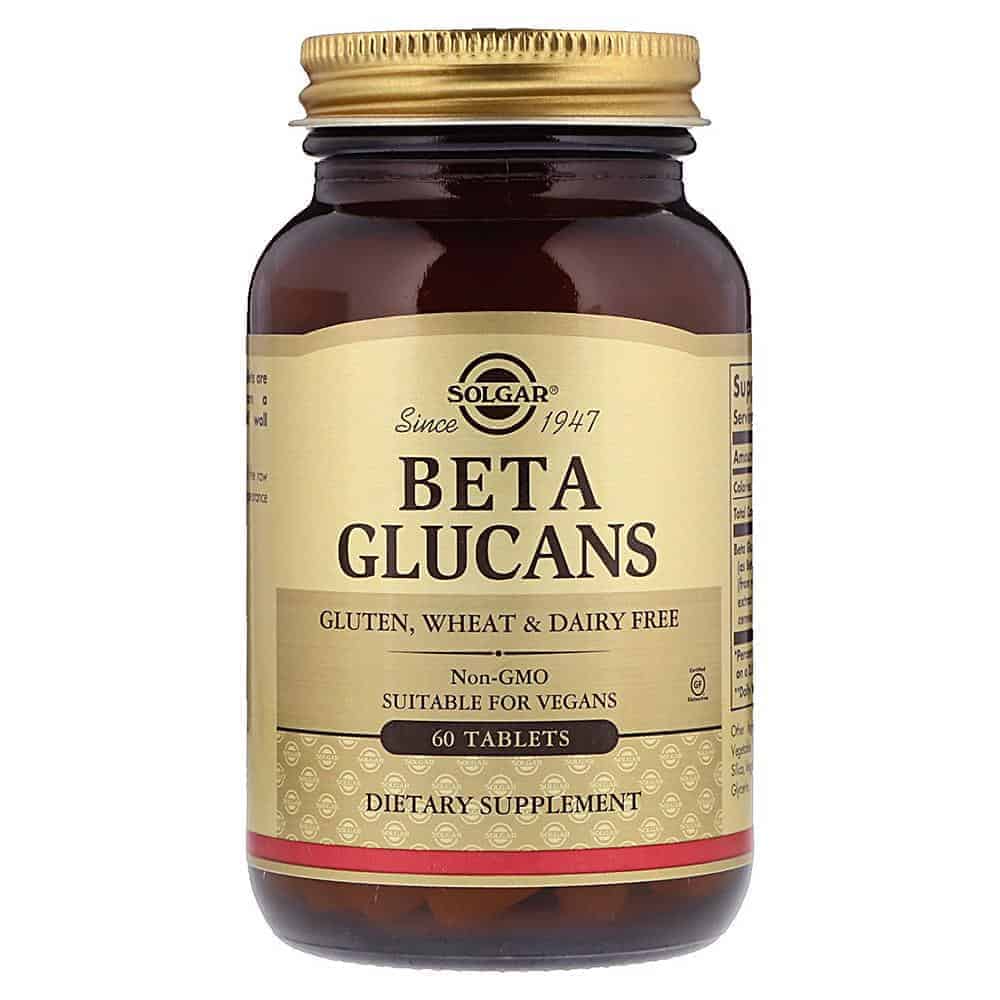 Solgar, Beta Glucans, 600mg, 60 Tablets, For Strengthening Immunity
Beta glucan for cancer patients
Additional therapy for oncology patients - most often through infusion, in agreement with the doctor. Combined with chemotherapy, they improve the survival and quality of life of patients.
Transfer Point beta glucan helps with:
- all infectious diseases caused by viruses, bacteria and fungi,
- chronic inflammation,
- tumor diseases,
- hematological diseases (leukopenia, thrombocytopenia, anemia),
- autoimmune diseases (lupus, arthritis, ulcerative colitis, psoriasis...),
- slow and poor healing of injuries,
- postoperative recovery,
- exposure to different types of radiation (UV, electromagnetic)
- increases the effectiveness of chemotherapy
 Transfer Point Beta 1,3 D Glucan, 500mg, 30 or 60 Capsules, American Beta Glucan
Beta glucan for viral diseases (HPV)
Beta-glucans are often used as therapy in infected people HPV virus and other viral diseases.
Pharmas beta glucan is the only beta glucan on the market that contains highly purified (min. 85%) beta -(1,3/1,6)-d glucan in a full daily dose of 1275 mg with the addition of probiotics Bifidobacterium animalis ssp. lactis BLC1; and antioxidants of vitamins C, D and zinc in full doses.
 PharmaS Pro Beta Glucan, 1275mg, 30 Bags, Cultures of Live Lyophilized Bacteria
Beta glucan for blood cholesterol
Maintaining normal cholesterol levels in the blood – glucans from barley and oats reduce the absorption of cholesterol from food in the stomach and intestines. Total and LDL cholesterol are reduced and a protective effect is achieved in vascular diseases.
Beta glucan Transfer Point used in atherosclerosis (decreases cholesterol, prevents plaque formation)
Transfer Point Beta 1,3 D Glucan, 500mg, 30 or 60 Capsules, American Beta Glucan
Conclusion
Depending on the type and source, beta glucans can help with a variety of conditions. Their immunomodulatory effect can help with weakened immunity caused by viral infections and other diseases.
Dietary supplements are the most practical way of taking beta glucan and come in various forms and at different prices. If you did not find your choice in this article, take a look all beta glucane.
For people with health problems, it is definitely recommended to consult a doctor or pharmacist before taking dietary supplements, including beta glucan.
Literature
1. Rondanelli M, Opizzi A, Monteferrario F. Le attività biologiche dei beta-glucani [The biological activity of beta-glucans]. Minerva Med. 2009 Jun;100(3):237-45. Italian. PMID: 19571787.
2. Akramiene D, Kondrotas A, Didziapetriene J, Kevelaitis E. Effects of beta-glucans on the immune system. Medicine (Kaunas). 2007;43(8):597-606. PMID: 17895634.
3. Vetvicka V, Vetvickova J. Glucan–resveratrol–vitamin C combination offers protection against toxic agents. Toxins (Basel). 2012 Nov 9;4(11):1301-8. doi: 10.3390/toxins4111301. PMID: 23202317; PMCID: PMC3509709.
