
Best Vitamins For Male Fertility (2026)


Fertility is a key aspect of reproductive health, and in the process of realizing the desire for parenthood, both in men and in women, vitamins play an important role.
While the importance of nutrition and vitamins for a woman's fertility is often discussed, the role that vitamins play in stimulating male fertility is less emphasized.
Research has shown that certain vitamins and minerals can be crucial for maintaining the health of sperm, stimulating their motility and increasing the chances of conception.
In this updated guide, we explore the most effective, science-based supplements and best male fertility vitamins that support sperm quality, motility, and count.
In this article
Symptoms of male infertility
Infertility in men can be related to different factors, and it is recognized based on different symptoms and diagnostic tests.
If a man has problems with ejaculation, such as retrograde ejaculation (when sperm enters the bladder instead of exiting the urethra) or anejaculation (when there is no ejaculation), this may be a sign of fertility problems.
Loss or decrease in libido can be related to hormonal imbalance or other health problems that can affect fertility.
Changes in the size, shape or texture of the testes can be a sign of fertility problems. For example, the presence of lumps or abnormalities may indicate varicoceles or other problems.
If there is a change in the amount, consistency, or color of the ejaculate, it may indicate a problem with sperm production or transport.
Pain or discomfort in the genital area, especially during intercourse, ejaculation or urination, can be symptoms of fertility problems.
Hormonal disorders, such as low testosterone or high prolactin levels, can affect a man's fertility.
Previous illnesses or injuries that may have affected the reproductive system, such as infections, inflammatory conditions, or injuries to the testicles, can increase the risk of infertility.
How do vitamins affect fertility?
Vitamins are essential nutrients that play a key role in maintaining the body's overall health, including reproductive health.
When it comes to fertility, certain vitamins have a significant impact on sperm quality and the function of male reproductive organs.
Key ingredients that affect fertility are zinc, selenium, coenzyme Q10, L-carnitine, and vitamin D.
Here's how other vitamins and minerals affect male fertility:
- Vitamin C: An antioxidant that protects sperm from oxidative stress and improves their motility. It can also stimulate testosterone production.
- Vitamin E: Another antioxidant that helps protect sperm from damage and improves sperm quality.
- Vitamin D: It plays an important role in maintaining sperm health and reproductive function.
- Vitamin B Complex: Including B6, B9 (folic acid) and B12, these vitamins support sperm production, improving sperm quality and motility.
- Zinc: It is important for the production of testosterone and the maintenance of sperm health.
- Selenium: An antioxidant that improves sperm quality and can increase fertility.
- Magnesium: Plays an important role in the body's energy processes and can support sperm health.
- Omega-3 fatty acids: Help maintain sperm health and improve their motility.
- L-arginine: An amino acid that can improve blood flow to the reproductive organs and stimulate sperm production.
- L-Carnitine: Improves sperm motility and quality. It also has an antioxidant effect.
- Coenzyme Q10: An antioxidant that can improve sperm quality and male fertility.
- Glutathione: Another antioxidant that protects sperm from damage, improves sperm quality, regulates hormonal balance and strengthens the immune system.
| Ingredient | Why is it important? |
|---|---|
| Cink | The foundation of male fertility is built by testosterone. |
| Selenium | Protects sperm from damage (antioxidant). |
| L-Carnitine | It provides energy for mobility (speed). |
| CoQ10 | A sperm “battery”, crucial for those over 35. |
| Vitamin D | Receptors for vit D are found on the sperms themselves. |
Adding these nutrients to the diet can provide the necessary support for optimal male reproductive health and fertility.
How to improve male fertility?
Increasing male fertility can be achieved through changes in lifestyle, eating habits and nutritional supplements.
Maintaining a healthy lifestyle with regular physical activity, avoiding smoking and excessive alcohol consumption helps reproductive health. It is also important to systematically work on stress reduction.
A balanced diet with the consumption of fruits, vegetables, whole grains, healthy fats and proteins is also important. Processed foods and added sugars should be consumed in smaller quantities or avoided.
Dietary supplements such as vitamins C, E, D, B complex, folic acid, zinc, selenium, L-carnitine and glutathione can contribute to trying to conceive.
Regular medical check-ups are important to identify any medical problems that may affect fertility.
What forms of male fertility vitamins are there?
Vitamins for male fertility come in several forms:
- Tablets: Dietary supplements often come in this form. Tablets are easy to use. Some people may find it difficult to swallow tablets, especially if they are larger.
- Capsules: They are easier to swallow than tablets due to their rounded shape.
- Sachets: Some supplements come in powder form that comes in sachets and dissolves in water before taking.
What are the best vitamins for male fertility?
The best vitamins for male fertility contain nutrients such as vitamins C, E, D, B, zinc, selenium, omega fatty acids, amino acids and other ingredients that support male fertility.
The best multivitamins for men are those with a good ratio of price, quality and suitability of products for male fertility.
In order to choose the best option for male fertility, it is important to understand that sperm health plays a key role in the conception process. Certain vitamins and minerals can be very helpful in improving sperm quality and increasing fertility. They affect various aspects of sperm health, including sperm motility, number and morphology.
If male infertility is suspected and male fertility is to be checked, it is usually recommended to see a doctor specializing in reproductive health, such as a urologist or andrologist, who will perform appropriate tests and diagnostic procedures to determine the cause and recommend appropriate treatment.
In addition, dietary supplements are a popular choice.
Below are several nutritional supplements with vitamins and minerals, L-carnitine, L-arginine and other nutrients that serve as food for quality sperm and male fertility.
1. PROfertil – Gold standard
Clinically tested formula specially designed to optimize sperm quality. PROfertil is a dietary supplement with L-carnitine, L-arginine, coenzyme Q10, glutathione, vitamins and minerals. PROfertil capsules contain a patented, clinically tested combination of ingredients for nutritional support of male fertility.
 PROfertil®, 60 or 180 Capsules, For Nutritional Support of Male Fertility
2. Orthomol Fertil Plus – Comprehensive micronutrient support
This German formulation provides a complex blend of antioxidants (vitamins C, E) and trace elements such as selenium that protect against oxidative damage. Orthomol Fertil Plus is a dietary supplement with a special medical purpose - to improve sperm quality. It contains antioxidants and other micronutrients that contribute to improving sperm quality. Orthomol Fertil Plus comes in daily doses that include tablets and capsules.
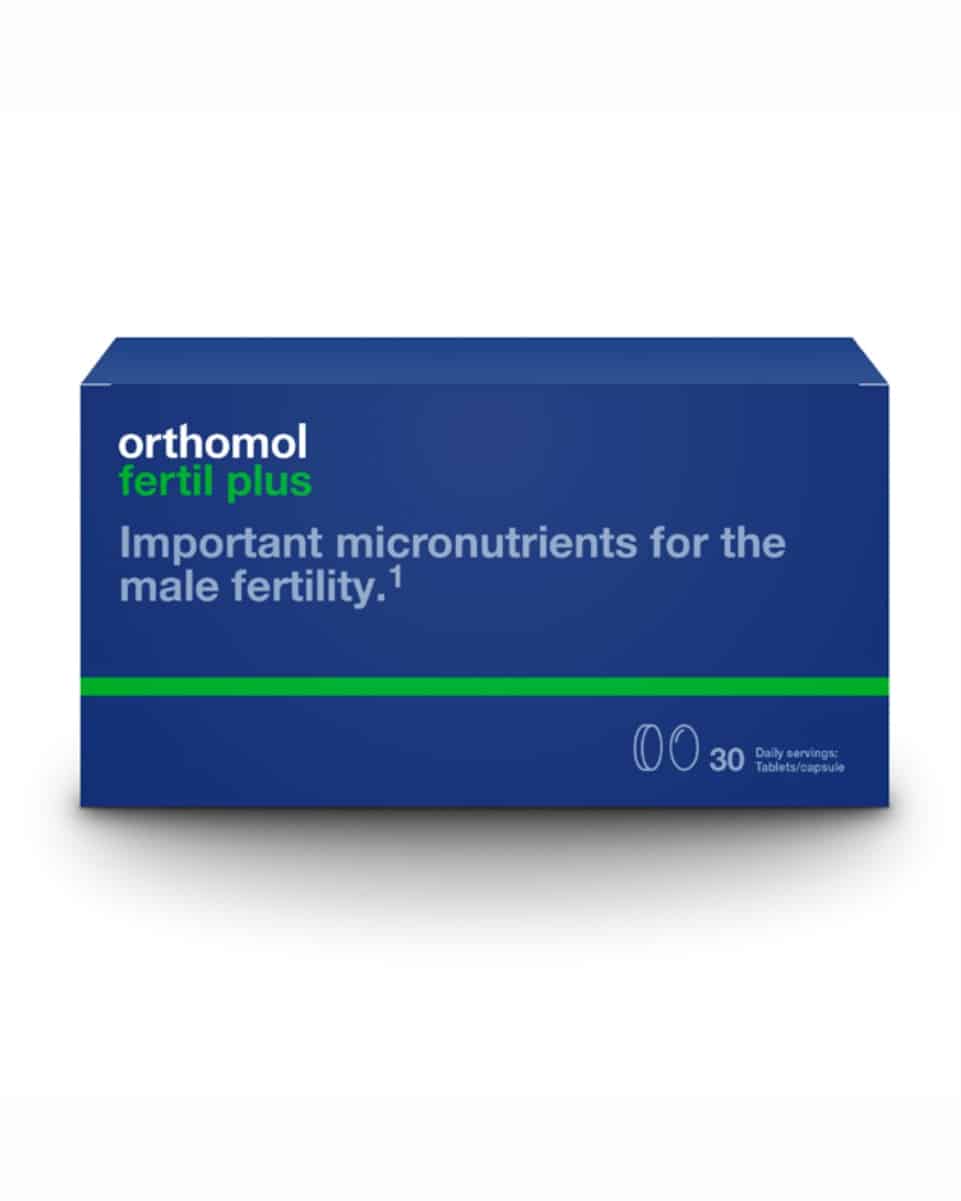 Orthomol® Fertil Plus, 30 or 90 Daily Doses, For Male Fertility
3. Proxeed Plus – Targeted energy for mobility
Proxeed Plus sachets (daily dose) contain key nutrients, vitamins and minerals, such as L-carnitine, acetyl-L-carnitine and folic acid, which help improve sperm count, concentration and motility. It focuses on the metabolic needs of sperm. High concentrations of L-carnitine and acetyl-L-carnitine help improve sperm energy levels and motility.
 Proxeed® Plus, Fertility and Reproductive Health of Men, 30 Bags
4. Catafertyl, For Him – Comprehensive support at an affordable price
Catafertyl FOR HIM contains 8 carefully selected ingredients for male fertility: N-acetyl-L-cysteine, L-arginine, L-citrulline, selenium, zinc and B vitamins. It has the lowest price of all the dietary supplements on this list.
 Catafertyl, For Him, 30 Sachets, Fertility Support
Practical tips for success
- The 90-Day Rule: The process of creating new sperm takes approximately 74 to 90 days. Start taking supplements at least three months before you plan to conceive.
- Watch out for heat: High temperatures are the enemy of sperm. Avoid tight underwear, long hot baths, and holding a laptop directly on your lap.
- Lifestyle Synergy: Supplements work best with a balanced diet, moderate exercise, and reduced alcohol and tobacco intake.
When to see a doctor?
While supplements are a great support, they are not a substitute for medical advice. If you have been trying to conceive for more than a year (or six months if your partner is over 35), we recommend seeing a doctor for a more in-depth analysis.
More recommendations for vitamins
Product catalog:
Male fertility
Continue reading:
The best multivitamins
The best multivitamins for men
Literature
Kuchakulla M, Soni Y, Patel P, Parekh N, Ramasamy R. A Systematic Review and Evidence-based Analysis of Ingredients in Popular Male Fertility Supplements. Urology. 2020 Feb;136:133-141. doi: 10.1016/j.urology.2019.11.007. Epub 2019 Nov 17. PMID: 31747549.
Santos HO, Howell S, Nichols K, Teixeira FJ. Reviewing the Evidence on Vitamin D Supplementation in the Management of Testosterone Status and Its Effects on Male Reproductive System (Testis and Prostate): Mechanistically Dazzling but Clinically Disappointing. Clin Ther. 2020 Jun;42(6):e101-e114. doi: 10.1016/j.clinthera.2020.03.016. Epub 2020 May 21. PMID: 32446600.
